Last updated November 21, 2026
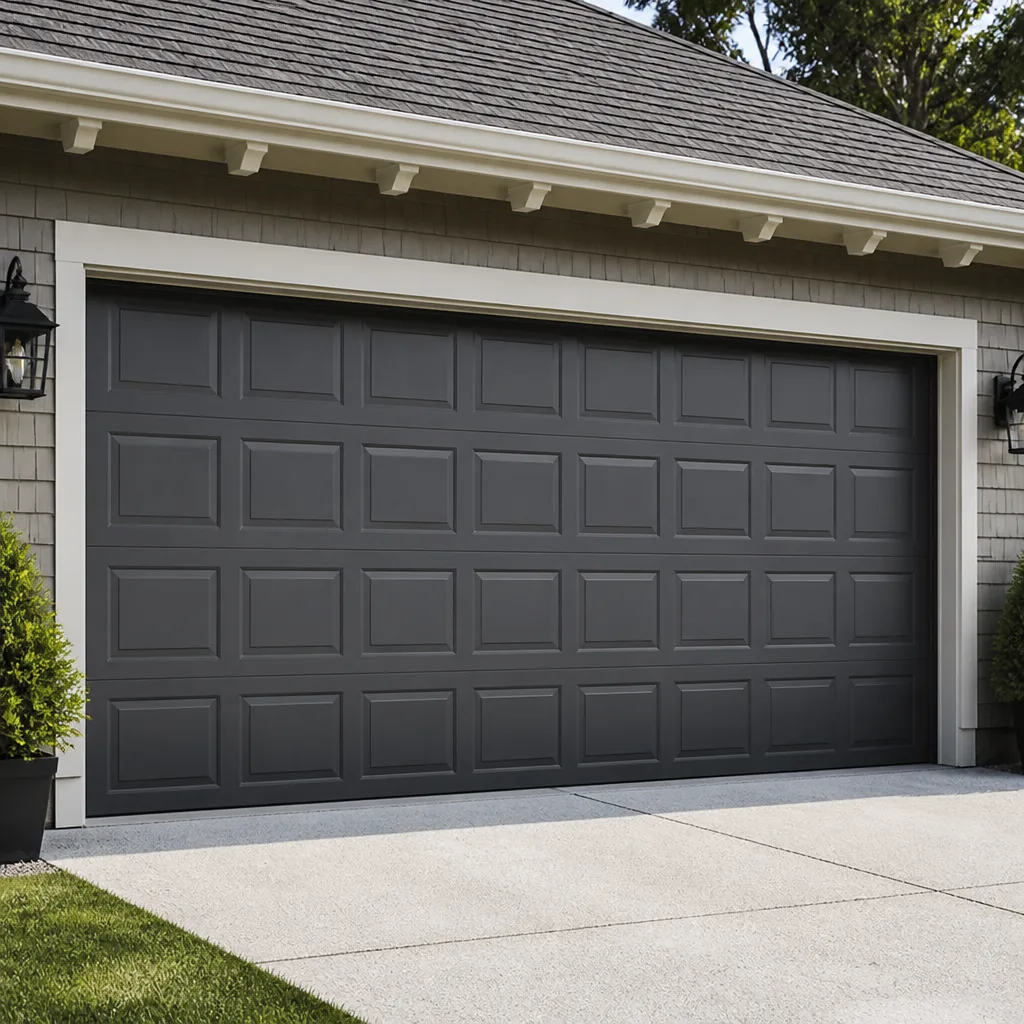 Raised-panel steel
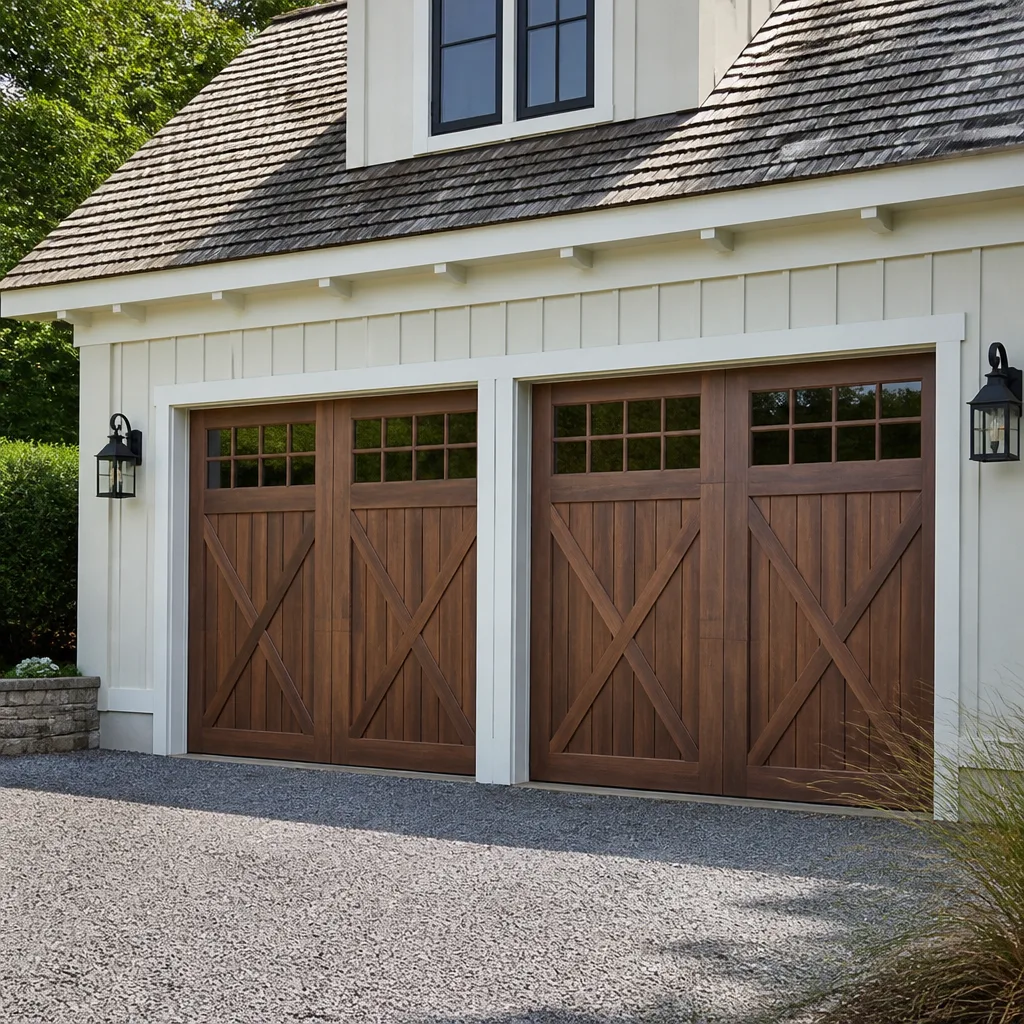 Carriage house
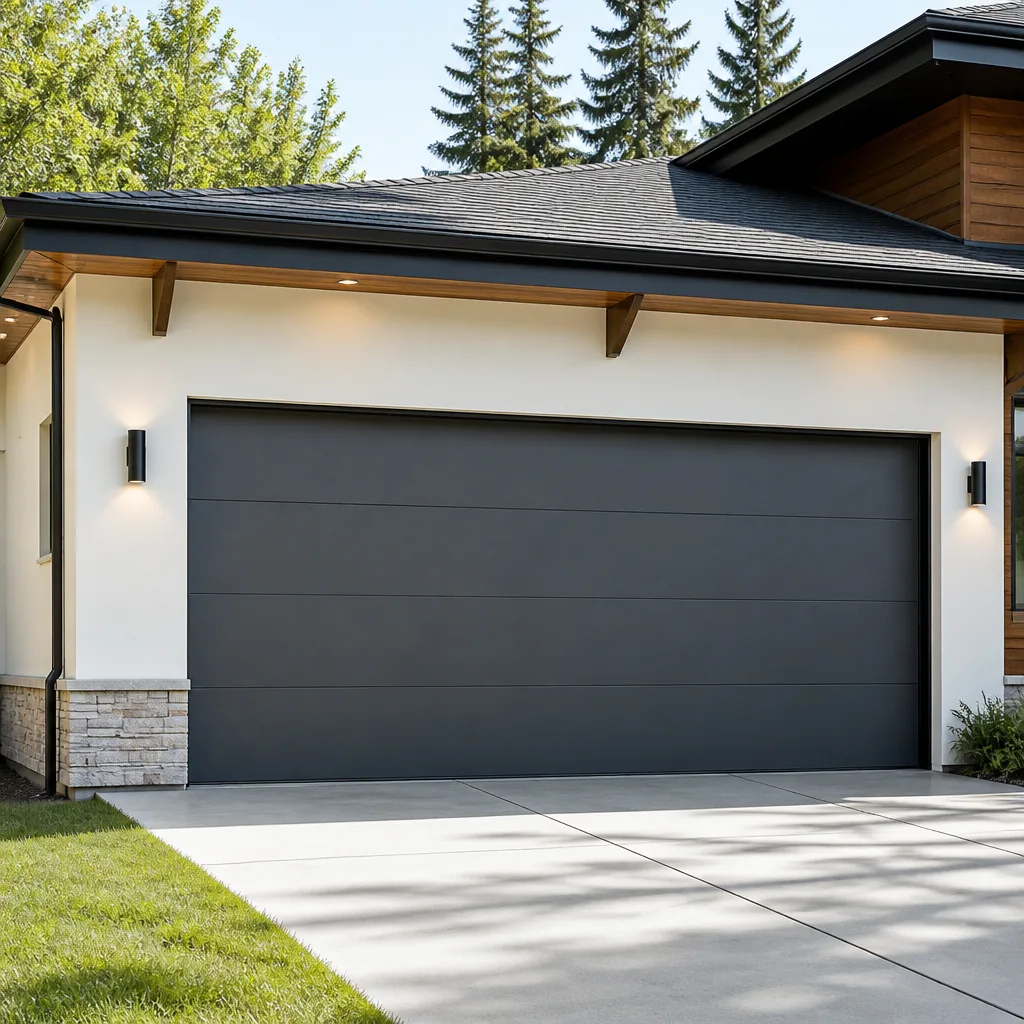 Modern flush
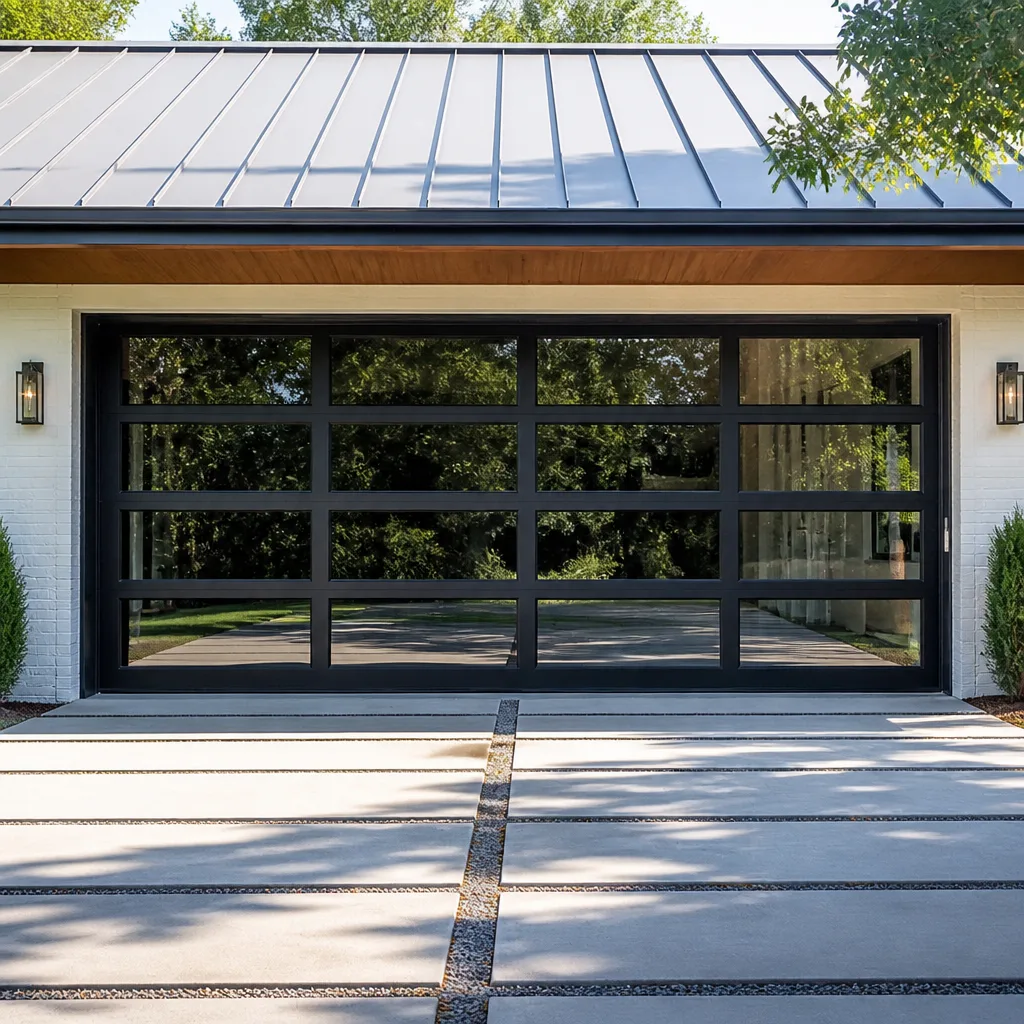 Full-view glass
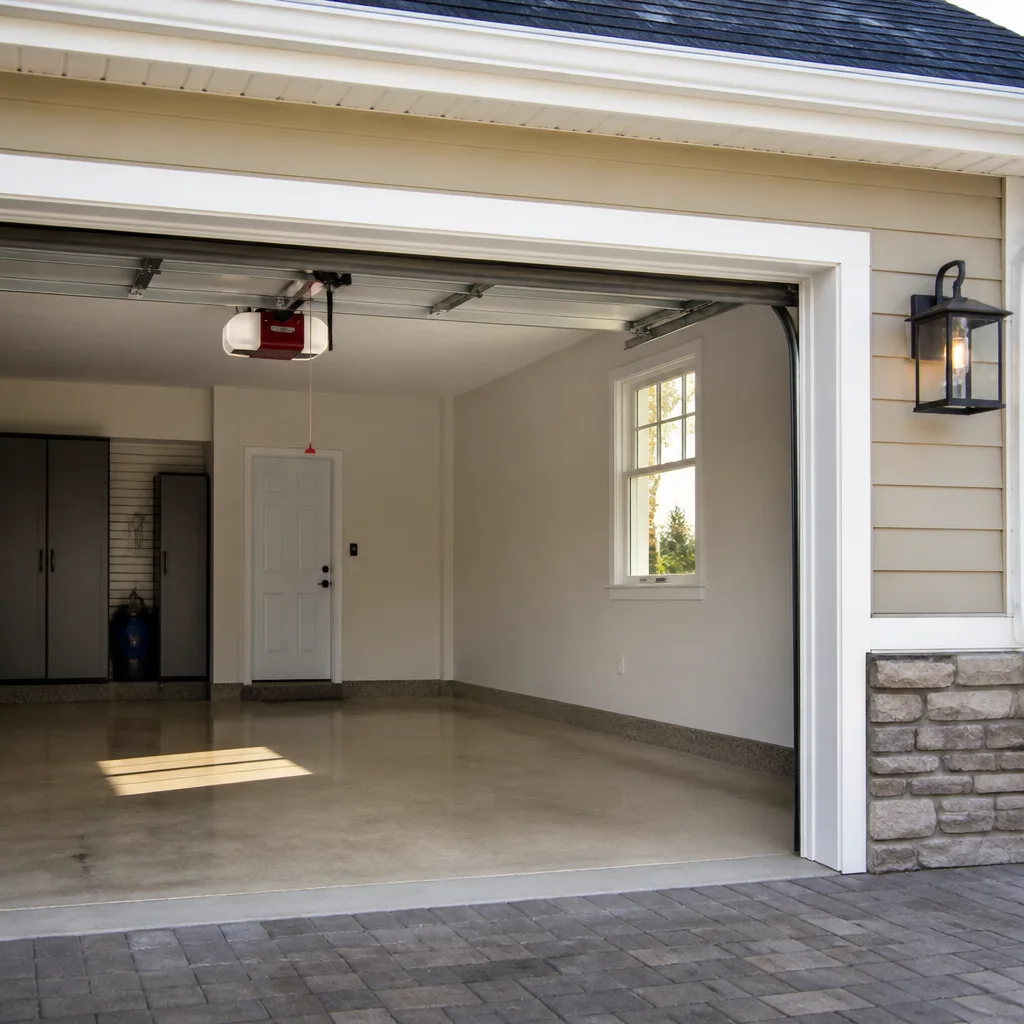 LiftMaster openers
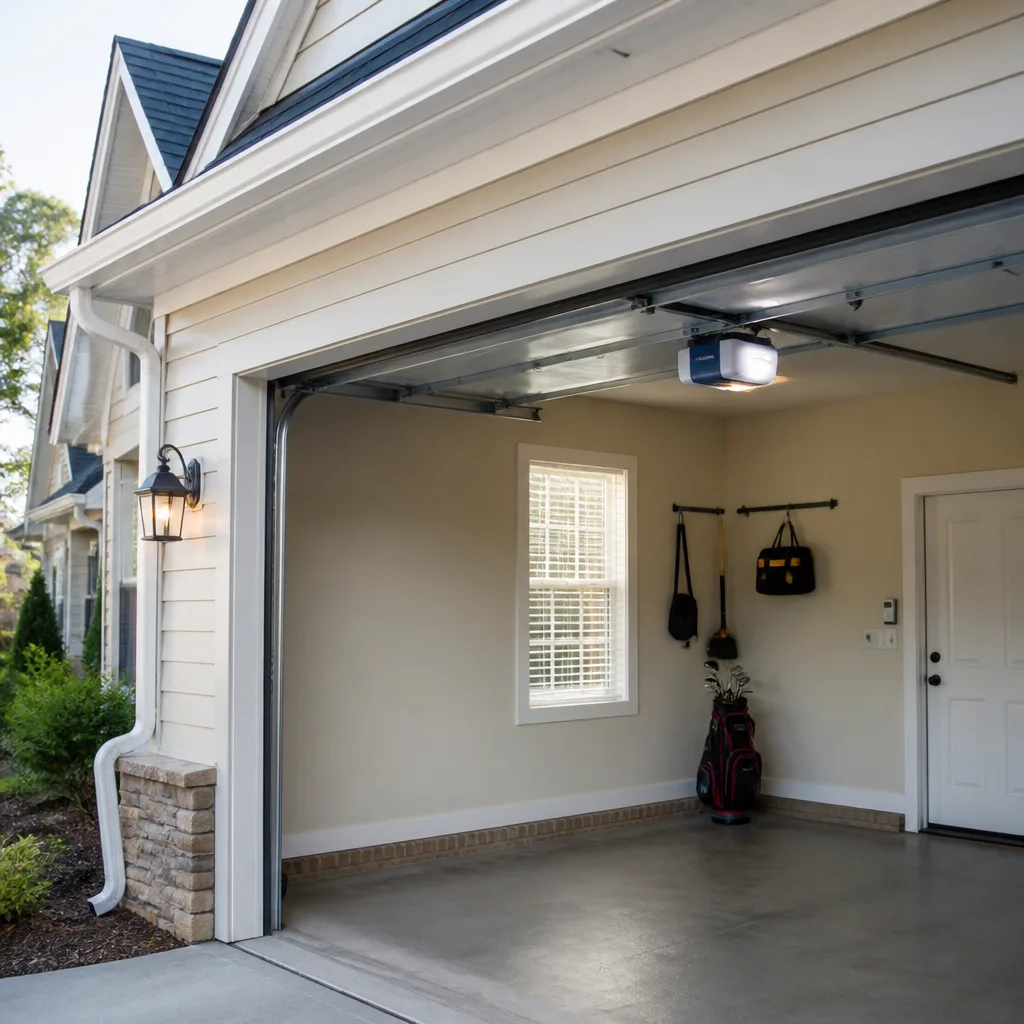 Chamberlain openers
Full 25-point door and opener safety check with every visit - springs, cables, rollers, tracks, and your LiftMaster or Chamberlain opener included
You get a price before we start. It does not change when the pro arrives.
Get your free estimateGarage Door Warning Signs: A Middletown Homeowner’s Reference Guide
A grinding noise when the door closes is not “normal garage door noise.” It’s usually a roller wearing through its nylon sleeve, and left alone you have roughly three weeks before that roller seizes and locks the door in place. Most of the expensive garage door failures we get called about in Middletown announce themselves long before the door stops working: a small squeal, a slight hesitation, a spring that looks a little straighter than it used to. This guide decodes those signals so you can act on a small repair instead of a much larger one. You’ll learn what each sound points to, how to read movement, what worn parts actually look like, and which warning signs mean stop using the door right now.
Quick Answer
The main warning signs of a failing garage door are unusual noise (grinding, squealing, popping, rattling, or banging), uneven or hesitant movement, a door that reverses before it closes, visibly stretched or gapped springs, frayed or hanging cables, and rollers that look flat or chipped. Any loud pop followed by a door that won’t lift usually means a broken spring and the door should not be used. Grinding and squealing are earlier, cheaper-to-fix signals. In Middletown, seasonal temperature swings cause most of these warnings to appear or worsen, so a quick monthly look and listen catches problems while they’re still small.
Styles & brands we work with
- Raised-panel steel
- Carriage house
- Modern flush
- Full-view glass
- LiftMaster openers
- Chamberlain openers
Table of Contents
- What Each Garage Door Sound Is Telling You
- Movement Pattern Red Flags
- A Plain-Language Visual Inspection Guide
- The Triage System: Monitor, Call Today, or Stop Now
- How Middletown’s Seasons Mask or Accelerate Warning Signs
- Opener Clues You Can Read From Inside the Garage
- Building a Simple Inspection Routine
- Common Mistakes to Avoid
- When to Call a Professional
- Frequently Asked Questions
What Each Garage Door Sound Is Telling You
Garage doors are one of the few things in a house that talk to you. Every moving part makes a sound when it starts to wear, and each sound comes from a specific component. Learning to separate them is the fastest way to know whether you’re looking at a minor tune-up or an urgent garage door repair. Here’s how we break down the five most common noises.
- Squealing or high-pitched whining: almost always a lubrication or roller problem. Metal rollers running dry, or nylon rollers with worn sleeves, squeal as they travel the track. It’s the earliest and cheapest warning to address, and usually the easiest fix.
- Grinding: a roller whose bearing is failing, or a track that’s out of alignment so the roller scrapes rather than rolls. Grinding noticeably speeds up over a few weeks. This is the sound from the opening of this guide, and it’s the one homeowners most often dismiss as normal.
- Popping: usually a torsion spring under tension shifting or binding, or a cable jumping its drum. A single loud pop followed by a door that feels unusually heavy or won’t lift is the classic broken-spring signature. Stop using the door.
- Rattling: loose hinges, brackets, or the door’s panels themselves working against their fasteners. Harmless-sounding, but it shakes every other connection loose over time and can widen gaps in the door.
- Banging or slamming: a door that drops too fast, often from a misadjusted spring or a failing opener. A door should never slam. That impact stresses the whole system and is worth investigating right away.
If you can point to which sound you’re hearing and roughly where it comes from, that’s most of the diagnosis done before anyone arrives. In our experience, homeowners who can describe “grinding on the left track near the bottom” instead of “it makes a noise” save time and often money, because the first visit is the right visit.
Movement Pattern Red Flags
Sound gets the attention, but how the door moves is just as telling. A healthy door travels smoothly, at an even pace, top to bottom, and touches the floor gently before reversing when you close it. Anything that interrupts that rhythm is a signal. Watching the door for one full open-and-close cycle is a five-minute habit that pays for itself.
The single most misunderstood movement problem is a door that hesitates at the bottom before closing. People assume “it’s just being careful.” In truth, a hesitation low in the travel usually points to a balance or spring issue, or the safety sensors catching something in the last stretch. A door that hesitates at the top is a different animal entirely, often a sign of opener force limits, a worn idler, or the door binding as it comes off the header. Same word, two different causes, two different fixes.
- Hesitation or pause at the bottom: check the safety sensor eyes first, then look at spring balance.
- Hesitation or pause at the top: suspect opener force settings, a binding track, or worn hardware near the header.
- Uneven travel (one side higher than the other): a stretched spring on one side or a cable that’s slipping. The door is twisting, and that stresses the panel seams.
- Reversing partway down: usually the safety sensors, sometimes a misaligned track or a door that’s binding and tripping the opener’s obstruction logic.
- Door falls the last few inches and hits hard: the springs are no longer counterbalancing the weight. Stop using it and call before the next cycle.
Two or more of these happening together means the door’s balance is already off. That’s the point where a door tends to break something, because the opener is now doing a job the springs are supposed to do. A Genie or Chamberlain opener that suddenly seems underpowered is often just a door that’s no longer balanced.
A Plain-Language Visual Inspection Guide
You don’t need to know what a torsion spring is to spot a bad one. Wear has a look, and once you know it you can’t unsee it. Do this inspection with the door fully closed and the opener disconnected (the release cord does that) so nothing moves while you look. This is a look-only check. Don’t put your hands near springs or cables while the door is under tension, and never try to adjust either one yourself. Those parts carry a dangerous amount of force, and a trained professional should be the only one to touch them.
Springs
A healthy torsion spring is a tightly wound coil with an even gap between every turn. A poor one has a visible split, one section that’s spaced wider than the rest, or a noticeable bend. If you can see daylight through a gap in the coil that wasn’t there before, the spring is stretching and getting closer to failure. Extension springs (the long ones that run above the tracks) should have safety cables running through them. If those cables are missing or slack, that’s worth raising on the next service call.
Cables
Good cables are straight, taut, and neatly wound on their drums. Watch for fraying (looks like a rope starting to separate), kinks, or a cable that’s come off its drum and hangs loose. A loose cable on a closed door is a call-today item, because the next time the door cycles it can whip or pop free.
Rollers
Rollers come in metal and nylon. Either way, the roller should be round and sit in the track without a gap. A flattened spot, a chipped edge, or a nylon roller with the sleeve worn through is a red flag. Nylon that’s turning gray and dusty is normal wear; nylon that’s cracked or missing a chunk is not. When several rollers look tired at once, replacing the full set together is usually cheaper than a series of individual visits.
Panels, hinges, and weather seal
Look down the door lines from a few feet back. If one panel is out of line, the door may be twisted or a hinge is failing. The bottom weather seal should sit flush on the floor; a gap lets water and pests in, and it tells you the door isn’t closing evenly.
The Triage System: Monitor, Call Today, or Stop Now
Here’s where a lot of homeowners go wrong: they treat every warning the same, either ignoring everything or panicking at every squeak. We use a three-tier triage, and it keeps the decision simple.
Tier 1: Monitor and maintain
- Faint squealing
- Occasional rattling
- Rollers that look dry but aren’t cracked or flat
- A door that runs smoothly but the opener’s remote is acting up
These are tune-up items. Note them, schedule service when it’s convenient, and check again in a few weeks. This is where the $80 service call saves you the $400 emergency repair.
Tier 2: Call today
- Grinding that has gotten noticeably worse
- A door that hesitates or reverses during a cycle
- Rattling that’s started widening gaps or shaking the whole door
- A cable that looks frayed or has slipped off its drum
- Uneven travel, one side higher than the other
None of these are emergencies yet, but they’re the warning signs that lead to an emergency if left. Call and get it on the schedule.
Tier 3: Stop using the door
- A loud pop followed by a door that won’t lift or feels extremely heavy
- Visible broken spring (a clear split in the coil)
- A cable hanging loose or wrapped wrong
- A door off its track or visibly out of the opening
- Any door that falls freely when lifted partway and released
Stop using the door and get someone out to look at it. If a door in this condition is left open, or a car is stranded inside, our Middletown garage door repair pros can usually respond the same day. If you’re facing an emergency, call us and describe what you’re seeing; spring, cable, and off-track problems head to the front of the line.
How Middletown’s Seasons Mask or Accelerate Warning Signs
Garage doors don’t wear at a steady rate. They wear in cycles, and Middletown’s seasons are the biggest driver of those cycles. That matters because it changes how often you should be looking.
In summer, heat expansion loosens wood framing, makes tracks bind slightly in the rails, and dries out lubricant faster than homeowners expect. Squeals and rattles that start in late June or July are usually heat and dryness, and they’re easy to fix while they’re small. The trap is that they often quiet down in fall on their own, which makes people think the problem went away. It didn’t; the wear is just sitting there waiting for the next cycle.
Winter is the harder season. Cold makes metal contract, lubricants thicken, and the whole system work harder per cycle. Springs – the most common failure point on any residential door – are under constant tension and tend to fail at the coldest part of the year, often with that single loud pop. If you’ve been hearing a faint squeal or grinding through fall, don’t wait for the first hard freeze to book service.
Spring and fall are the swing seasons, and they’re when hinges and mounting screws work loose from repeated temperature cycling. This is the time to run a full sound-and-movement check. In our experience, doors in Middletown that get a proper inspection in early spring and again in early fall see far fewer mid-winter surprises than doors that only get attention when something breaks.
When to adjust your inspection frequency:
- Inspect monthly through the coldest stretch (roughly December through February) and again in peak summer heat.
- Do a full sound-and-movement check when seasons turn.
- After any run of severe storms or high winds, walk the door before the next cycle.
- Anytime you notice a change in sound or movement, check within a week, not “someday.”
Opener Clues You Can Read From Inside the Garage
Half of the “my door isn’t working” calls we get turn out to be opener problems, not door problems. The good news is the opener leaves its own clues, and they’re readable without tools. Opener repair is a bench-level skill, especially with modern smart-home systems, so knowing when the motor or controls are the issue rather than the door helps you get the right fix faster. Whether the unit is a LiftMaster, a Chamberlain, or a Genie, the signs are consistent.
- Door reverses for no visible reason: often the safety sensors. Look for one sensor with a light on and one without, or a cobweb or debris in front of the lens.
- Opener runs but door doesn’t move: could be a stripped drive gear, a broken spring, or a released carriage. If the door is unusually heavy by hand, it’s the springs.
- Opener stops after a few seconds: usually the force limits are tripping because the door is binding or out of balance.
- Remote or wall button works inconsistently: battery, interference, or a failing logic board. If the wall button always works but the remote doesn’t, it’s likely the remote side.
- Loud clicking or humming with no movement: the motor’s running but the drive isn’t engaging. Stop cycling the opener and get it looked at; running it repeatedly on a stuck door wears the gear out fast.
If you’re not sure whether it’s the opener or the door, describe the behavior and we’ll point you in the right direction. A garage door opener repair visit can usually sort the motor side while a door tech checks the balance on the same trip.
Building a Simple Inspection Routine
The best inspection is short and repeatable. We’ve watched homeowners who never check their door and homeowners who check it every week; the difference in surprise repairs is real. Here’s the routine we suggest, and it takes about ten minutes.
- Listen first. Run the door once, close your eyes, and note every distinct sound and where it comes from.
- Watch the travel. Check that the door moves evenly, touches the floor gently, and reverses when tested with a soft object in the path (or by triggering the safety sensors).
- Lift test (door only, opener disconnected). With the door disconnected and fully closed, lift it about waist high by hand and let go. A balanced door stays put or drifts slowly. If it slams down, the springs aren’t doing their job.
- Look at the springs. Straight, even coil, no splits, no gapped turns.
- Look at the cables. Straight, taut, no fraying.
- Look at the rollers. Round, no flat spots, no cracks.
- Look at the hardware. Tight hinges, straight panels, a weather seal that sits flat on the floor.
The lift test is the one homeowners most often skip, and it’s the one that catches spring problems before they turn into a no-door day. Skip it on any door whose springs you already suspect are broken or worn. If it’s an older door you’ve never tested, have the balance checked first.
Common Mistakes to Avoid
- Dismissing grinding as “just how garage doors sound.” It isn’t. Grinding points to a specific worn part that gets more expensive the longer it’s ignored.
- Greasing everything to quiet a squeak. Lubricant on the wrong surface (like a track’s inside edge or a tension spring) can attract dust and make things worse. Grease goes on rollers, hinges, and the opener’s rail, not on springs.
- Adjusting the door’s spring or cable yourself. These parts are under heavy load, and getting it wrong can injure you or damage the door. This is the one garage door job that should always go to a trained professional.
- Calling a general handyman for a spring. Garage doors are a specialty, and a generalist can get the door moving without getting the balance right, which shortens the life of everything downstream. We work only on garage doors, which is exactly why a check on yours is usually quick and accurate.
- Replacing one roller when the whole set is worn. If one nylon roller has worn through, the others are close behind. Doing the full set together saves a repeat visit.
- Waiting for the door to stop working before booking anything. That’s a plan to pay emergency rates for a problem that was obvious weeks earlier.
- Skipping seasonal checks because “the door works fine.” In Middletown, most failures we see came with a warning sign first. The sign was just ignored.
When to Call a Professional
Call us when a sound or movement issue has crossed into Tier 2 or Tier 3. That means grinding that’s getting worse, a door that hesitates, reverses, or slams, a spring that looks split, a cable that’s come loose, or a door off its track. Call immediately if a door won’t lift, feels unusually heavy, or has visibly broken hardware; those are the situations where an emergency visit saves you from a larger repair or a security risk. Less urgent repairs like a single noisy roller or a tune-up can be scheduled, and we’ll do a fast diagnostic to confirm which is which. Our technicians have up to 9 years of experience with every major brand including Clopay, Amarr, and Wayne Dalton, and we handle garage door spring repair and opener work with the same visit. Garage Door Repair Middletown Pros offers free estimates in Middletown – call (833) 508-9328.
Frequently Asked Questions
The most common warnings are unusual noise (grinding, squealing, popping, rattling, or banging), uneven movement, a door that hesitates or reverses, visible gaps in a spring, frayed cables, and worn rollers. Any of these are worth noting and most are worth a call; a broken spring or a door that’s off its track means stop using the door. Call (833) 508-9328 if you’d like a professional to look at any of them.
The classic signs are a single loud pop, followed by a door that feels very heavy when you lift it by hand or won’t open at all. Visually, you’d see a clear split in the torsion spring coil or a gap between turns. Don’t run the door if you suspect a broken spring, and don’t try to replace it yourself; the part is under heavy tension. Call (833) 508-9328 and we’ll make it safe and get it fixed.
No. A hesitation near the bottom usually points to a balance issue, a misadjusted safety sensor, or a spring that isn’t counterbalancing the door properly. A hesitation at the top is a separate problem, often opener force settings or binding hardware. Both are worth checking; call (833) 508-9328 and describe what you’re seeing.
We suggest monthly checks through the coldest part of winter and again in peak summer heat, plus a full sound-and-movement check when the seasons turn. Middletown’s temperature swings accelerate wear on springs, hinges, and tracks, so the seasonal inspection is the one that catches the most. A tune-up twice a year is a good habit to keep. Call (833) 508-9328 to book one.
Can a noisy garage door just be lubed, or does it need a repair?
Sometimes it can be. Faint squealing is often dry rollers or hinges, and lubrication is the right first step. Grinding, popping, and uneven rattling are almost always worn or broken parts, not a lubrication problem. Describe the sound and we’ll tell you which one you’re dealing with; estimates are free, call (833) 508-9328.
Maybe, but it’s a gamble. Cold thickens lubricants, stiffens metal, and adds stress to every moving part, so a door that’s already squealing or hesitating is the most likely to fail on the coldest morning. The warning signs are your chance to fix it before that happens. Call (833) 508-9328 if you’ve been hearing one.
The Bottom Line
Garage doors give you a long runway of warning before they fail. The trick is knowing what to listen for and looking in the right places. Grinding and squealing point to rollers. Popping and a sudden heavy door point to springs. Hesitation points to balance. Rattling points to hardware. Springs and cables are the parts you can only look at, never touch; everything else can be checked and often tuned. Keep an eye on the door seasonally, especially in Middletown’s cold snaps and summer heat, and treat the warnings when they show up. A small, well-timed repair almost always beats an emergency, and the written estimate always comes before work starts. Call (833) 508-9328 for a free estimate if you’ve spotted any of these signs.
Written by the team at Garage Door Repair Middletown Pros.
See the difference
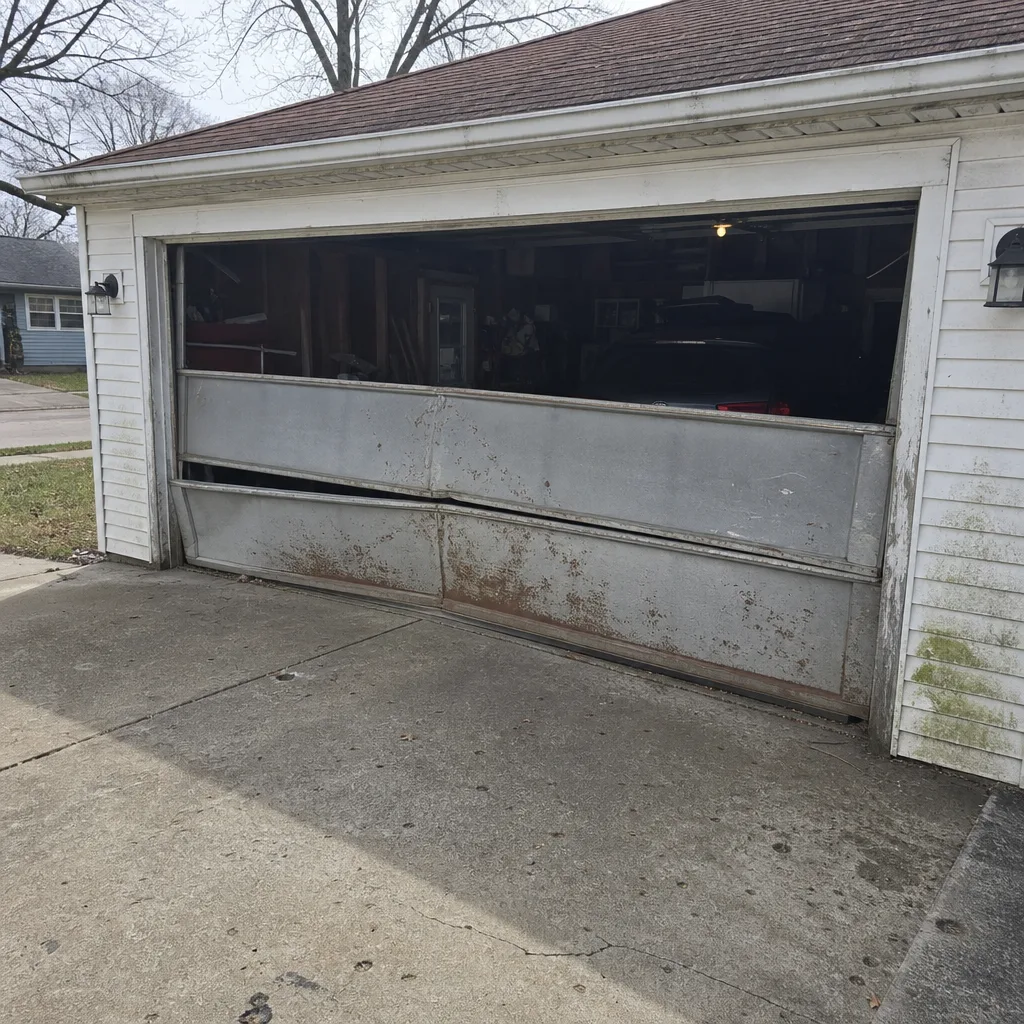 Before
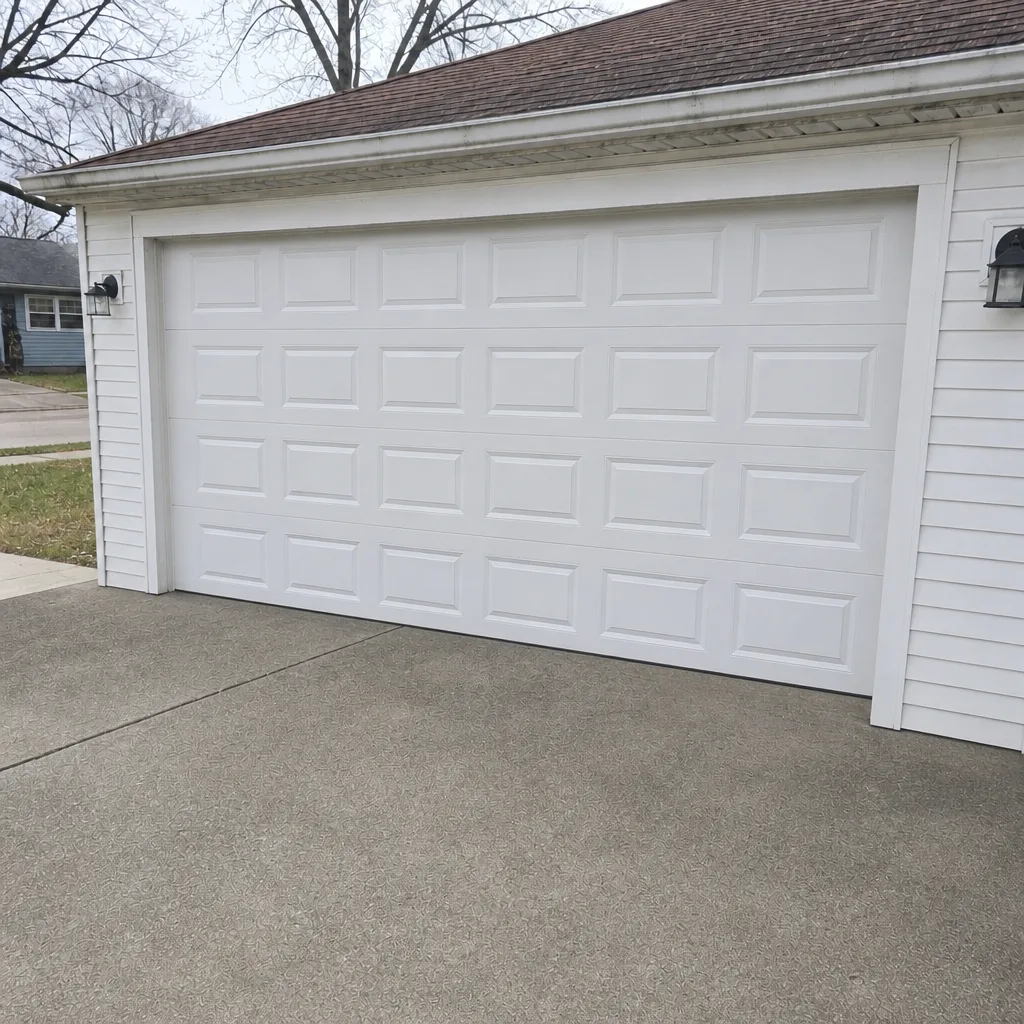 After
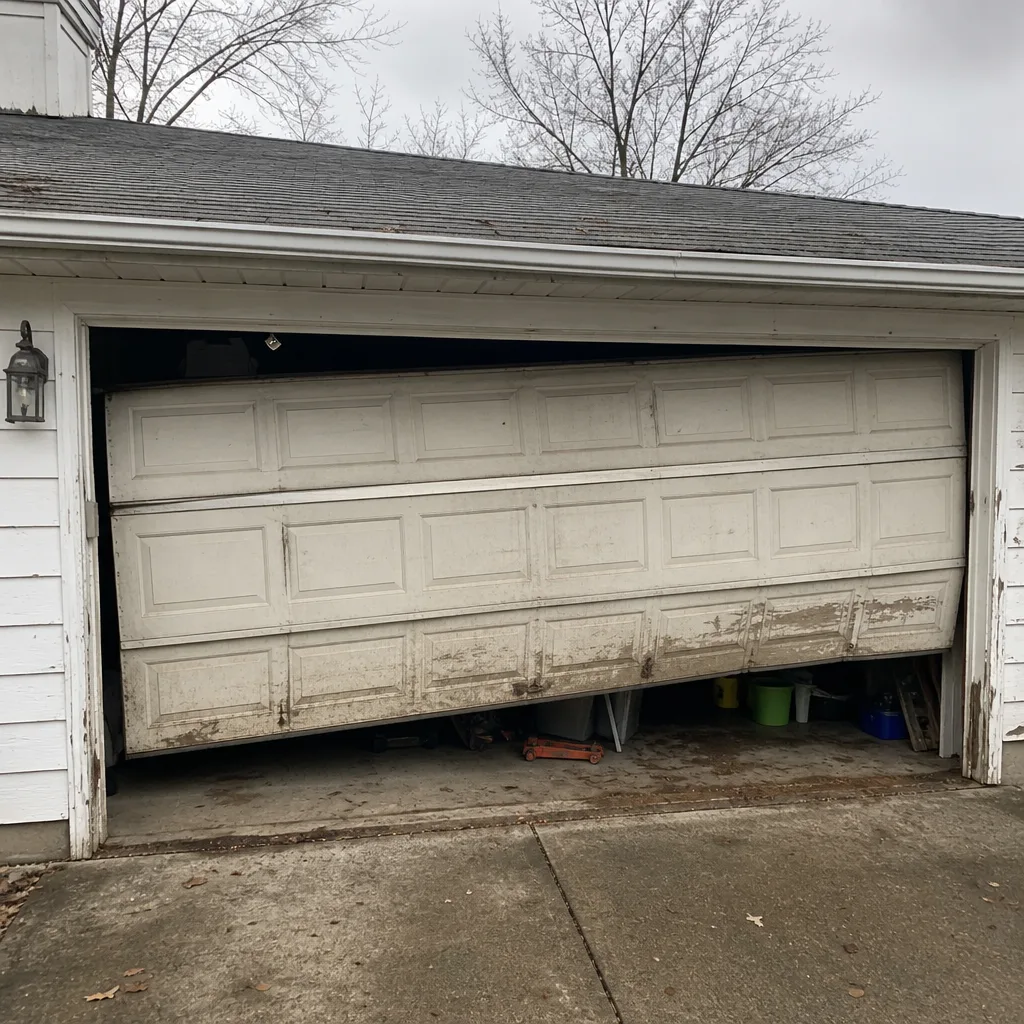 Before
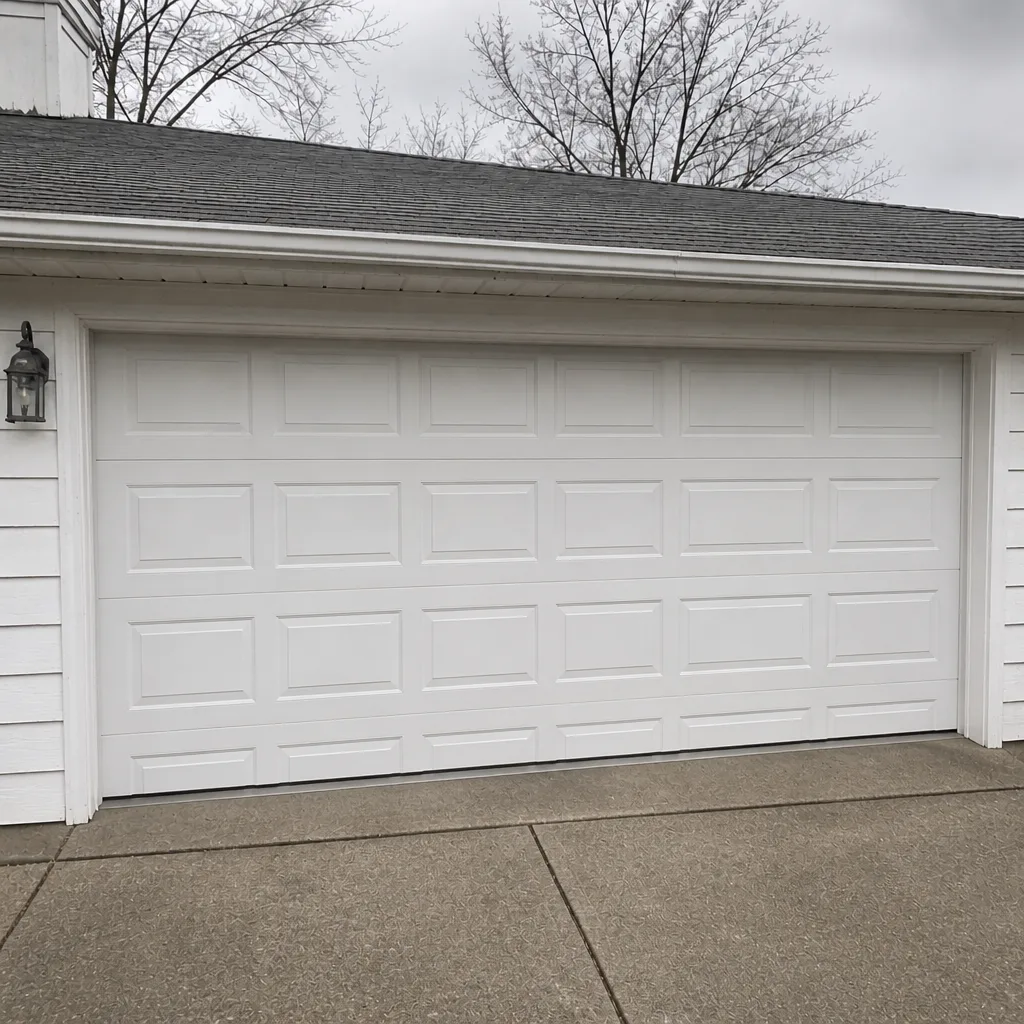 After
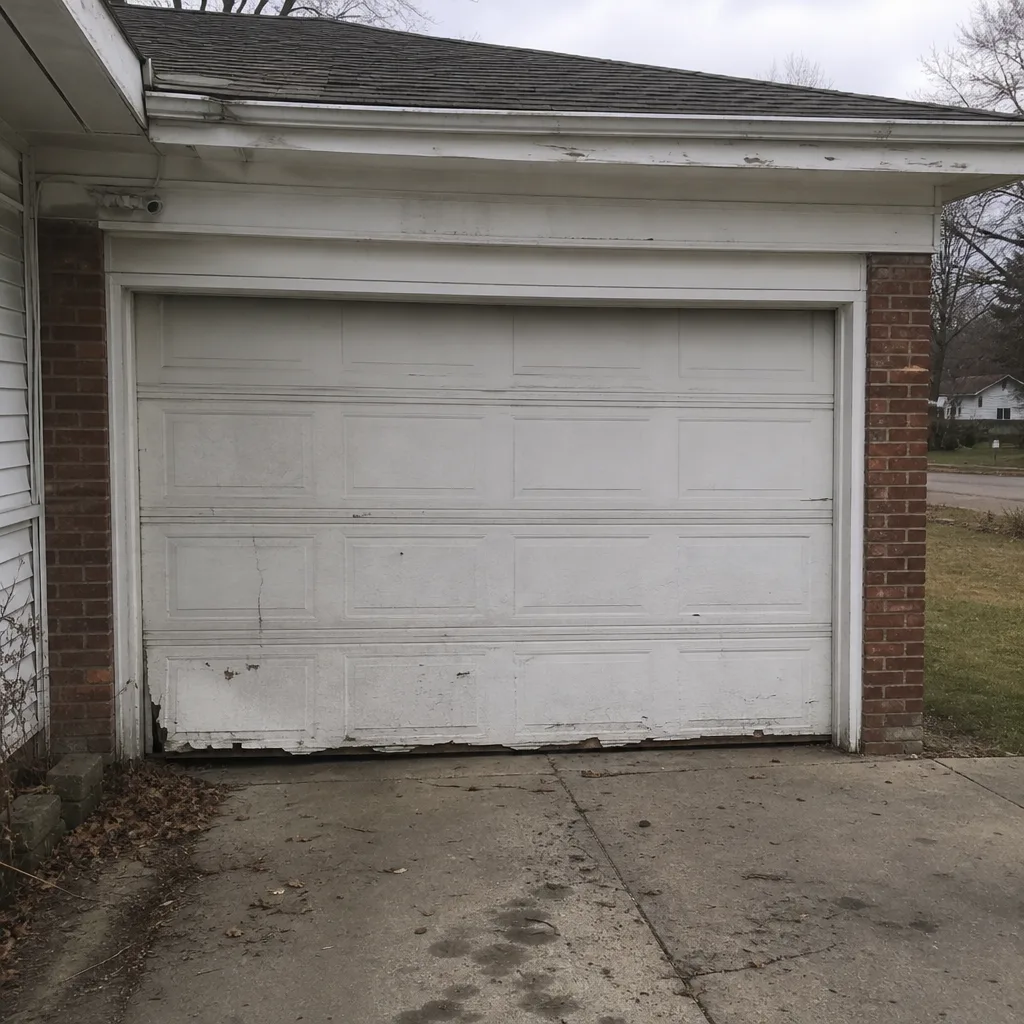 Before
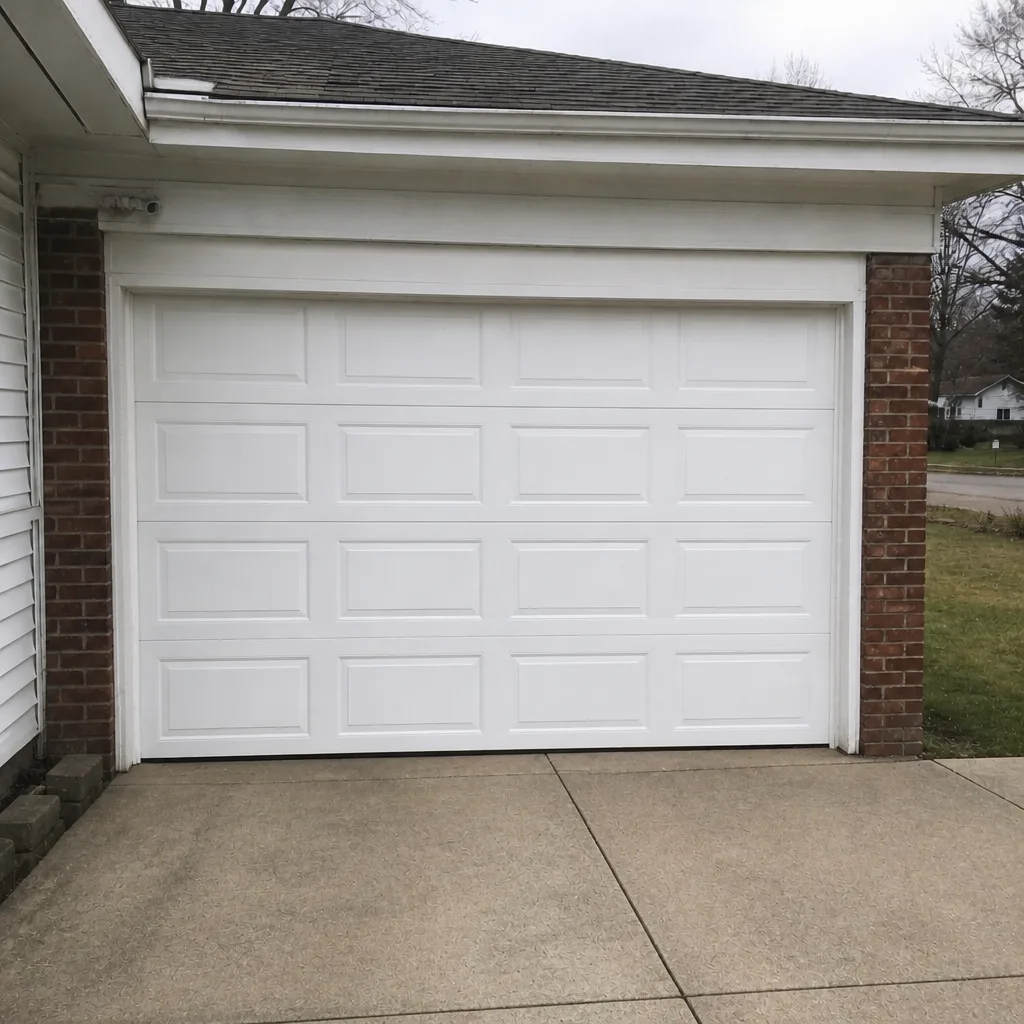 After